
Personal Branding in Real Life, for Real People
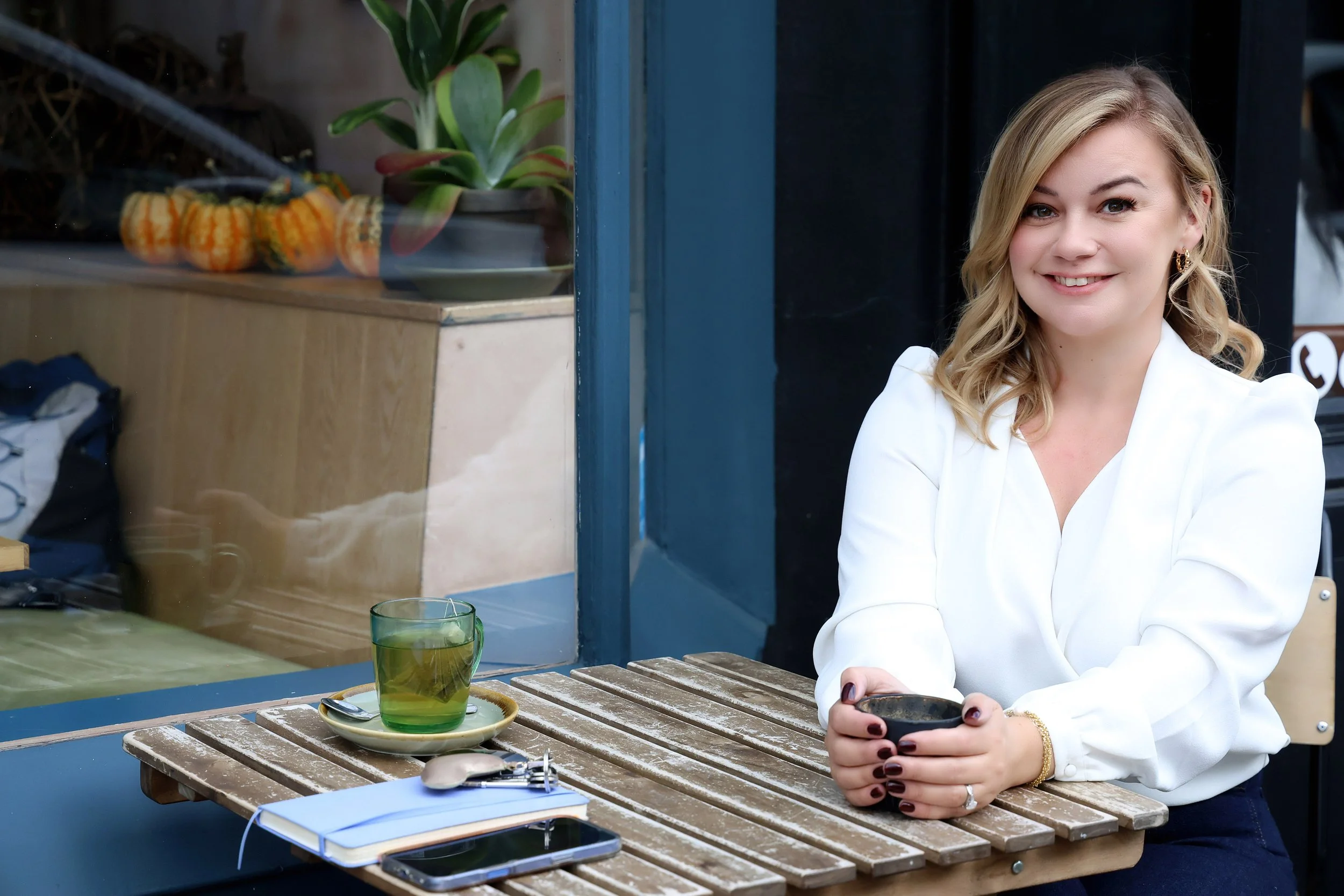
Firstly, indulge me. Allow me to re-introduce myself, it’ll help with the context.
I’m Teri. Mummy to my just-turned three-year-old Teddy, wife to Ben, Founder of Beyond & Co., and a Personal Brand and Leadership Visibility Advisor.
My life is busy, and I love it that way. And I know I’m not alone in that.
When I started Beyond & Co. in early 2025, I’d just returned to the UK after nine years living in Sydney, Australia. I’d also made the decision to step away from a successful corporate career with no job to go to. Some called it brave. At times, it felt closer to foolish.
I won’t go into the ins and outs of why I started the business - that’s a story for another time. But I do want to share how I’ve used my personal brand to grow Beyond & Co., in the hope that it helps you to do the same.
Personal brand isn’t self-promotion. It’s value creation.
One of the biggest misconceptions I hear is that personal branding is about talking about yourself. Your achievements. Your services. What you can do.
In reality, the strongest personal brands are built by people who flip that lens outward.
Personal brand, done well, is about value creation - understanding how your lived experience, perspective, and pattern recognition can genuinely help someone else think more clearly or move forward.
When your content consistently answers questions, reframes challenges, or articulates what others are struggling to put into words, credibility follows naturally.
In practice, this means leading with insight over introduction - sharing what you’ve learned, not simply what you do.
Visibility has to fit the life you’re living.
Here’s the part that often gets overlooked.
Most advice on personal branding assumes unlimited time, energy, and headspace. It’s built for a version of life that doesn’t include demanding roles, young families, leadership responsibility or, frankly, being human.
That’s never been my reality.
Building Beyond & Co. happened alongside sleep deprivation, nursery drop-offs, client work and all the usual competing priorities. Which meant one thing became very clear, very quickly:
Visibility only works if it’s sustainable.
Not performative.
Not all-consuming.
Not driven by guilt or “shoulds”.
Instead, it had to be intentional, focused, and aligned with how I actually work best.
In reality, that has meant limiting evening events, returning to the same networking spaces to build depth rather than breadth, and resisting the urge to be active on every social platform simply because I “should”.
Sustainable visibility isn’t about doing less, it’s about choosing what actually compounds over time and focusing your energy and efforts on that.
Creating content that works harder (so you don’t have to).
This has made a big difference for me.
Rather than constantly creating more, I focused on making what I did create work harder.
One considered idea.
One clear point of view.
Shared in multiple ways, across different channels and formats, over time.
The same insight might be a short LinkedIn post, an Instagram carousel, a newsletter reflection, or a talking point in a client conversation. Not duplicated; developed.
This approach - often referred to as content atomisation - removes some of the pressure, increases consistency, and allows your thinking to travel further without demanding more from you.
Most importantly, it keeps the focus on the quality of the idea, not the volume of output.
In practice, this looks like trusting one good idea enough to let it live in more than one place.
A few principles that have guided me
Rather than rules or tactics, these are the principles I’ve returned to time and again:
Clarity before visibility.
If you’re not clear on what you stand for, being more visible won’t help.Consistency beats intensity.
You don’t need to be everywhere - you need to be recognisable to the right people.Value earns attention.
When your content helps others think differently or more productively, trust follows naturally.Your brand is built in moments, as well as campaigns.
Over time, small, intentional signals add up.
None of these require more content, just more intention behind what you already share.
We all have a personal brand, whether we choose to be intentional about it or not.
The opportunity is in building visibility that’s considered, sustainable, and genuinely useful - for you and for the people you want to reach.